Mother Jones: The Mother of the Labor Movement
by Region 8 Webmaster John Davis
Mary Harris is name that you wont find in many history books. There are no skyscrapers in New York City that bear her name, or federal governmental office buildings named after her. The lone representation of her legacy by governmental recognition is the Mary Harris Jones Elementary School in Adelphi, Maryland. However, the record of her life is one of great importance to working people in this country.
Far too often history records the exploits of the wealthy and powerful while ignoring the triumphs of those who dedicated their life to helping others. Mary Harris was one such person, whose life and legacy is one that deserves recognition on this the day set aside to honor America’s workers. While the name Mary Harris is not know, it is her nickname “Mother Jones” that briefly scratches recognition in the 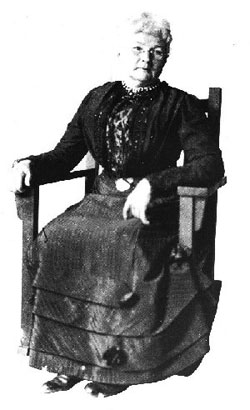 history books. history books.
Mary Harris “Mother” Jones was born in Ireland in 1830 and moved to Toronto with her family at an early age. Once completing her schooling, Mary worked as both a teacher and seamstress in the United States, ending up in Memphis, Tennessee in 1861. It was here she met and married George Jones, a member of the Iron Molders’ Union. Mary and George had a good life and began a family right away. In 1867 a yellow fever epidemic swept through Memphis, claiming the life of her husband George and their four small children. George and Mary nursed each child as the sickness claimed them one by one, with George finally succumbing to the disease after the children. His union brothers came and took care of the burial for Mary, as she found herself alone in the world. The poor of Memphis could not afford nurses to help them during the plaque, so Mary applied for and received a permit to care for the sick. Helping those she could, she spent her final days in Memphis caring for the sick until the disease had ran its course.
Afterwards, Mary moved to Chicago where she had briefly lived before moving to Memphis and took work as a seamstress. Her position as a seamstress placed her in the homes of the rich and powerful of Chicago, while the hungry and downtrodden lived on the streets outside the windows of the fine mansions in which she worked. Each day Mary watched the poor struggle to survive as the rich feasted off their labor. It was in Chicago that she joined the Knights of Labor.
The Knights of Labor had been founded in the years following the Civil War, when a group of men from both the North and South came together to fight a new type of slavery, with that being industrial slavery. The poverty in the years following the war had resulted in poor people of all races being exploited by the rich and powerful. Mary spent many evenings listening to the speakers at the union hall who inspired her to take up the struggle for the working poor and downtrodden. The great Chicago fire of 1873 left many poor and homeless, including Mary Jones who also lost her seamstress shop in the tragedy. It was then that she would wholly devote herself to the cause of labor.
In the 1880s, a massive immigration of the poor from Europe to the United States flooded the job market, further driving down wages and working conditions. To try and level the job market, the Knights of Labor and other unions began to work toward the idea of an eight hour work day in 1886, due to the fact that most workers were forced to toll long hours each day which meant fewer jobs and more desperation. Mary Jones was instrumental in the movement and helped lead a parade on Christmas Day of the poor and poverty stricken down the streets that lined the mansions of the wealthy. The next May a strike was called at the McCormick Harvester Works in support of the eight-hour workday. The police were brought in to shoot the striking workers and those who organized the strike were arrested and hanged on November 11, 1886. Mary Jones was not one of the unlucky activists to be charged and murdered, but she continued her fight for workers.
By now Mary had become known as “Mother Jones” and moved down into the mining areas of West Virginia, Pennsylvania and Virginia. Through many communities she worked to organize the miners so they could collectively demand better working conditions and fairer treatment.
In the spring of 1903, Mother Jones took up the struggle of children working in mills and joined a strike 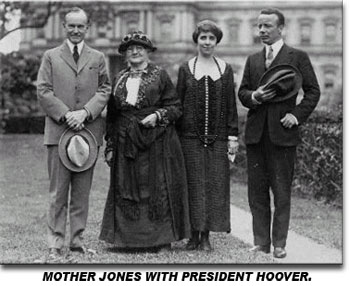 of 75,000 textile workers in Kensington, Pennsylvania. Of this number of strikers, over 10,000 were children, many of which were missing fingers from working in the mills. Most were under ten years old, while the law required children to be twelve before they could work in the mills. Mother Jones soon discovered that most of the children were working illegally because their fathers had been maimed or killed in the local mines. She tried to get the local newspapers to carry stories about the tragedy of children labor, but they refused because the mill owners held stock in the papers. So, again Mother Jones turned to parading the poor in the streets and took thousands of these little children down the streets to city hall where she called upon the mill owners to stop sacrificing children upon the altar of profit. While local papers would not carry the story, papers in larger Pennsylvania cities and in New York told of the sacrifice of the innocents in the mills in the name of profit. of 75,000 textile workers in Kensington, Pennsylvania. Of this number of strikers, over 10,000 were children, many of which were missing fingers from working in the mills. Most were under ten years old, while the law required children to be twelve before they could work in the mills. Mother Jones soon discovered that most of the children were working illegally because their fathers had been maimed or killed in the local mines. She tried to get the local newspapers to carry stories about the tragedy of children labor, but they refused because the mill owners held stock in the papers. So, again Mother Jones turned to parading the poor in the streets and took thousands of these little children down the streets to city hall where she called upon the mill owners to stop sacrificing children upon the altar of profit. While local papers would not carry the story, papers in larger Pennsylvania cities and in New York told of the sacrifice of the innocents in the mills in the name of profit.
Mother Jones then got the idea to take the children on a tour to spread the news of how they were being exploited. The marchers carried signs that read “More Schools and Less Hospitals” and “We Want Time To Play.” The group marched from Pennsylvania to Oyster Bay, New York where President Theodore Roosevelt was vacationing with his children. The President refused to grant an audience to the army of children that followed Mother Jones, but they continued to spread the word. In New York City the Mayor denied them access to the city until Mother Jones – then in her 70s- visited the Mayor in person and shamed him into letting the group enter the city. The people of New York listened to Mother Jones tell of how children as young as eight worked eleven hours a day in a factory for just three dollars a week.
The owner of the wild animal show at Coney Island offered to treat Mother Jone’s “Army” to a day on the boardwalk. Mother Jones was allowed to speak to the crowd at the show and she placed a group of little children in the cages that usually housed animals and told the crowd that children were being held captive in the mills of Pennsylvania just as the animals were captive in the show.
While her pleas continued to fall on deaf ears in Washington, the Pennsylvania Legislature were 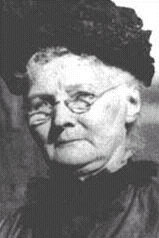 pressured into passing laws that forbid children under the age of fourteen to work in the mills. pressured into passing laws that forbid children under the age of fourteen to work in the mills.
In 1925 Mother Jones was attacked by a pair of men at friends house in which she was staying. She fought off the men and one eventually died from wounds he suffered in the attack. Mother Jones was arrested and charged with murder. However, the charges were later dropped when it was learned the men were associates of a prominent local businessman carrying out his despicable wishes.
Mother Jones died at the age of 100 in 1930, following a long life of working for the rights of others. While she lost her own children in 1867, her work for all children earned her the name “Mother Jones” for virtually everyone else. This Labor Day, remember it is not just the last fling of summer, but rather a day to remember heroes such as Mother Jones who fought so all working class Americans could have a better life.
|